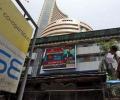
As many as 267 of 453 companies from the BSE500 index are trading above their consensus price targets, according to the data compiled by Bloomberg. Not all companies in the BSE500 index are tracked by analysts.

Total market funds are ideal for long-term investors who prefer a simple, hands-off approach, making them suitable for those unwilling to manage multiple funds.

Equity benchmark indices Sensex and Nifty declined for the second straight session on Friday following selling in banking, financial and select IT shares amid a weak trend in global markets. The 30-share BSE Sensex dropped by 125.65 points or 0.19 per cent to close at 66,282.74 as 16 of its constituents fell and 14 advanced. The index opened lower and fell further by around 513 points to the day's low of 65,895.41 in morning deals.

The Indian equity market clocked record average daily turnover (ADTV) in both the cash and derivatives segments in February amid a spike in volatility. The ADTV for the cash segment for both the exchanges combined came at Rs 1.27 trillion, while the same for the derivatives or the futures and options (F&O) segment stood at Rs 483 trillion in the previous month. The volumes for both cash and derivatives have almost doubled from a year ago on the back of rising retail participation in the world's fourth largest equity market.
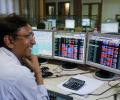
From the 30 blue-chip pack, Mahindra & Mahindra, IndusInd Bank, Bajaj Finance, Tata Motors, Bajaj Finserv, Nestle and ICICI Bank were the biggest gainers. State Bank of India, Tata Steel, Adani Ports, Zomato, UltraTech Cement and HCL Tech were among the laggards.

Among the main gainers were Jio Financial Services which jumped 4.99 per cent, Tata Steel (2.09 per cent), Maruti Suzuki (1.87 per cent), M&M (1.31 per cent) and Infosys (1.19 per cent).

'Those satisfied with returns and not expecting further rally could be booking profits and also stopping SIPs.'

'Sell in May, go away' is a popular market adage. But 'Don't sell any new shares in May' is the best kept secret of Dalal Street that's set to break. Sample this: the last four General Election election cycles starting 2004 have not seen a single initial public offering (IPO) launch during the month of May.

As milk prices rise, analysts have an optimistic view on dairy stocks such as Heritage Foods and Dodla Dairy, hoping the companies' margins will grow in the near to medium term. From a long-term perspective, they believe that a growing population, increasing disposable income and health consciousness will strengthen dairy consumption in India.


Bajaj Finance led the Sensex gainers' chart, spurting up to 2.38 per cent, followed by Bajaj Finserve rising 2.11 per cent and IndusInd Bank closing 1.66 per cent higher. Bharti Airtel, SBI and L&T increased by 1.60 per cent, 1.28 per cent and 0.92 per cent, respectively.

Inflows into equity mutual fund (MF) schemes declined for the third month in a row in March even though the equity market recovered sharply. Equity MF schemes raked in a net Rs 25,082 crore in March, down 14 per cent from February.

From the 30-share Sensex blue-chip pack, Titan, Adani Ports, UltraTech Cement, Tata Consultancy Services, NTPC, Bharti Airtel, Tech Mahindra, Infosys, Hindustan Unilever and JSW Steel were the biggest laggards.

From the 30-share Sensex pack, UltraTech Cement, JSW Steel, Adani Ports, Tech Mahindra, Titan, Maruti, Mahindra & Mahindra, Tata Steel and Reliance Industries were the biggest gainers. NTPC, Hindustan Unilever, Kotak Mahindra Bank, IndusInd Bank and Larsen & Toubro were among the laggards.

From the Sensex pack, Tata Motors, Sun Pharma, Wipro, Tata Consultancy Services, UltraTech Cement, Tech Mahindra, Bajaj Finserv, HCL Technologies, Infosys and IndusInd Bank were the major laggards. NTPC, Power Grid, Reliance Industries, Tata Steel, HDFC and HDFC Bank were the major winners.

'We emphasise the importance of not basing investment decisions solely on electoral outcomes.' 'Instead, focusing on investing in high-quality businesses capable of prospering regardless of the political landscape is paramount.'

Dwaipayan Bose on how index funds play a key role in the diversification of portfolios and help manage risks

rediffGURU Jinal Mehta answers readers' financial planning and health insurance queries

Dalal Street investors were a poorer lot on Monday as their wealth eroded sharply by Rs 14 lakh crore following a sharp decline in benchmark indices amid a global market meltdown due to recession fears. The 30-share BSE Sensex tumbled 2,226.79 points or 2.95 per cent to settle at 73,137.90. Intra-day, the benchmark slumped 3,939.68 points or 5.22 per cent to 71,425.01.

Equity fundraising through qualified institutional placements (QIPs) has gained traction, thanks to supportive equity markets and the need for fresh fundraising to meet capital expenditure (capex) requirements.

After a short-term blip, mutual funds (MFs) are back to adding new systematic investment plan (SIP) investors at a record high pace, which was seen during the financial year 2021-22 (FY22). During the first six months (H1) of this financial year (FY24), MFs have added a net 77 million SIP accounts compared to 56 million during the same period of FY23. The net additions this year are a tad higher than the 76.5 million additions in H1 of FY22.

For investors who missed the initial IPO frenzy, the market correction is an opportunity to selectively invest in promising names, but patience and careful evaluation remain the key.

Dalal Street had a roller coaster ride in 2024 from shattering record after record to facing heavy correction off-late but equity markets still rewarded investors with positive returns, driven by a surge in domestic fund flows and a resilient macro landscape. The first half of the year saw robust corporate earnings, a surge in domestic flows, and a resilient macro landscape, driving the Nifty to an all-time high of 26,277.35 in September 2024, according to Motilal Oswal Wealth Management.

Micro-cap stocks are in the line of fire as market regulator Securities and Exchange Board of India (Sebi) is tightening its noose around investment in small-cap stocks. Given this, analysts suggest investors exit the segment, at least, for the time being. Independent market analyst, Ambareesh Baliga, for instance, said that regulators have gotten worried on the valuation front, though belated, which could prove to be the last straw on the camel's back.

From the Sensex pack, Infosys, HCL Technologies, Infosys, NTPC, Mahindra & Mahindra, Tata Consultancy Services, Nestle, Tech Mahindra and Bajaj Finance were the major gainers. Power Grid, Larsen & Toubro, Maruti, Titan, HDFC Bank, Wipro, HDFC and ITC were among the laggards.

Global fund managers witnessed one of their largest-ever declines in assets under custody (AUC) during the ongoing correction in the Indian markets, as stocks came under pressure from foreign outflows and the weakening rupee.

Zomato emerged as the biggest gainer, followed by Reliance, Nestle, Asian Paints and Power Grid.

'Investors need to be stock specific and should not rush to buy stocks at the current levels.'
With the markets scaling new highs, as many as 43 stocks from the Nifty50 index and 27 of the 30 scrips that are part of the S&P BSE Sensex are trading above their respective 200-day moving average (DMA). The 200-DMA is seen as one of the most relevant trend indicators by investors and traders, who believe that stocks and indices trading above this level possess strength and are likely to rally in the short to medium term, while the ones trading below this level are viewed as bearish and expected to see a sell-off. Wipro, UPL, Kotak Mahindra Bank, Hindalco, Infosys, Cipla, and Adani Enterprises are the only stocks from the Nifty50 pack that are still below their respective 200-DMA, the exchange data suggests.

Adopting overly aggressive strategies without considering risk could lead to significant losses during the next downturn.

Overall market reaction to the Budget was neutral. Investors absorbed the changes to the tax rates (positive for salaried class) and capital gains taxes (CGTs, negative due to the removal of indexation and increases. Other proposals largely pertain to supporting rural development, buybacks taxed as dividends, Custom duty changes that impact multiple sectors, higher outlays for clean energy, etc. There's some moderation in the growth of capex outlay across defence, fer

From the 30 Sensex firms, Tata Consultancy Services and HCL Technologies dropped over 3 per cent each. Infosys, Tech Mahindra, Sun Pharma and Tata Motors were the other major laggards. Bajaj Finance, Bajaj Finserv, Nestle, HDFC Bank, ICICI Bank and State Bank of India were among the biggest gainers.

Among the Sensex firms, Bajaj Finserv, Tata Motors, Asian Paints, ITC, IndusInd Bank, State Bank of India, Tata Steel, Wipro, Infosys and Maruti were the major gainers. Tech Mahindra, HCL Technologies, Kotak Mahindra Bank, Titan and Larsen & Toubro were the major laggards.

From the 30-share pack, Hindustan Unilever, Tata Motors, Axis Bank, Nestle India, Asian Paints, ITC, Reliance Industries, Mahindra & Mahindra, IndusInd Bank and State Bank of India were among the laggards. Larsen & Toubro, Tata Steel, JSW Steel, HDFC Bank, Adani Ports, Kotak Mahindra Bank, Bharti Airtel and PowerGrid were among the gainers.

Despite the uncertainties created by rising bond yields and oil prices, fund managers have been proactively deploying fresh flows into the equity market. The cash available with equity fund managers, which has remained lower at around 5 per cent in the past few months, hit a 16-month low of 4.8 per cent in September, shows a Motilal Oswal Financial Services report. Cash holdings in equity schemes had topped 6 per cent in February amid subdued equity market sentiment.

Largecap companies are generally less vulnerable to economic slowdowns than their mid- and smallcap counterparts.

Mutual funds' equity buying remained elevated for the fifth consecutive month in December, taking the net equity purchase past Rs 1.7 trillion in 2023. The aggressive buying in December indicates that flows into equity funds are likely to have remained unaffected by the sharp run-up in the market last month. Mutual funds (MFs) bought equities worth Rs 23,000 crore last month (until December 28) compared to Rs 18,000 crore in November, shows data from the Securities and Exchange Board of India (Sebi).
Benchmark equity indices Sensex and Nifty closed higher on Friday after two days of fall, helped by buying in metal, telecom and auto stocks amid a firm trend in global markets. Automakers led by Maruti Suzuki India, Hyundai, Mahindra & Mahindra reporting robust wholesales of passenger vehicles and GST collections crossing Rs 1.50 lakh crore for the third straight month in May also added to the optimism. The 30-share BSE Sensex climbed 118.57 points or 0.19 per cent to settle at 62,547.11.
Benchmark Sensex pared early losses to close 242 points higher while Nifty settled above the 18,000-mark on Wednesday following gains in IT, oil and select banking stocks amid mixed global trends. Extending gains for a second day, the 30-share BSE Sensex advanced 242.83 points or 0.40 per cent to close at 61,275.09 with 20 of its constituents ending in the green. The index opened lower at 60,990.05 but later regained foot to touch a high of 61,352.55 in day trade.

'The velocity of the market correction in September was so fierce that 9 stocks declined for every one that advanced,' reveals Samie Modak.
